Skip to content
You've built countless truss rigs. But do you ever worry about that one small part holding it all together? A mismatch could turn your ground support into a major liability.
A sleeve block is the nerve center because it transfers the entire load from the horizontal truss grid to the vertical towers. Choosing the correct one is a critical safety decision that involves matching connectors, verifying load capacity, and confirming application suitability to prevent catastrophic system collapse1.
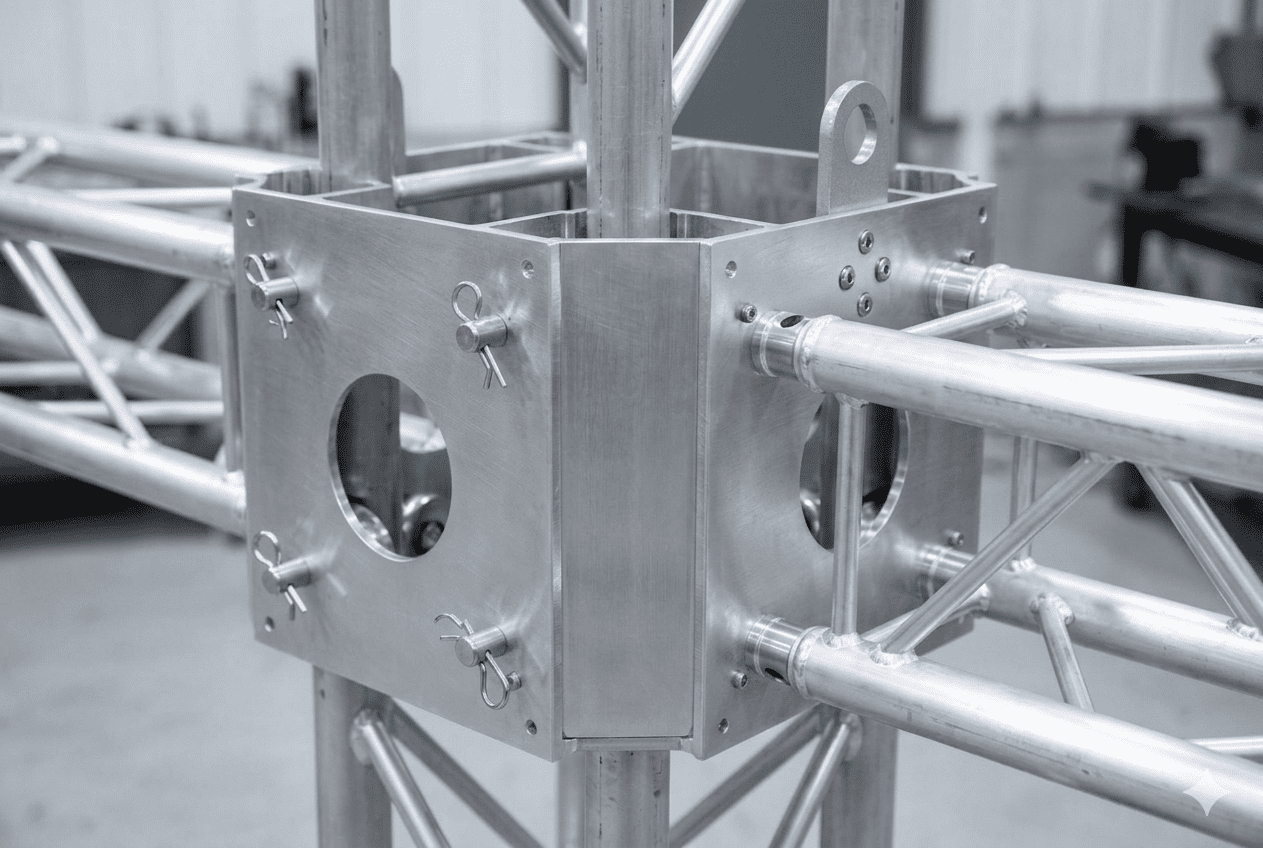
It’s easy to think a sleeve block is just a simple, interchangeable part. You have a 300mm truss, so you just need a 300mm sleeve block, right? I've seen this assumption made many times in my career, and it's one of the most dangerous misunderstandings in our industry. The reality is that this small component carries an immense responsibility. A failure here doesn't just mean a broken part; it means the potential failure of the entire structure. Let’s break down what really matters when selecting this critical piece of hardware, moving beyond simple dimensions to the details that ensure safety and reliability for your events.
Will Any Sleeve Block That Fits My Truss Cross-Section Work?
You need a new sleeve block for your 300mm truss, so you find one online with the same dimension. This seems simple, but it often leads to incompatible parts and project delays.
No, a sleeve block that only matches the truss cross-section is not guaranteed to work. The most critical detail is matching the connector system, like 50mm vs. 60mm spigots. A mismatch here is a common and dangerous point of failure.2
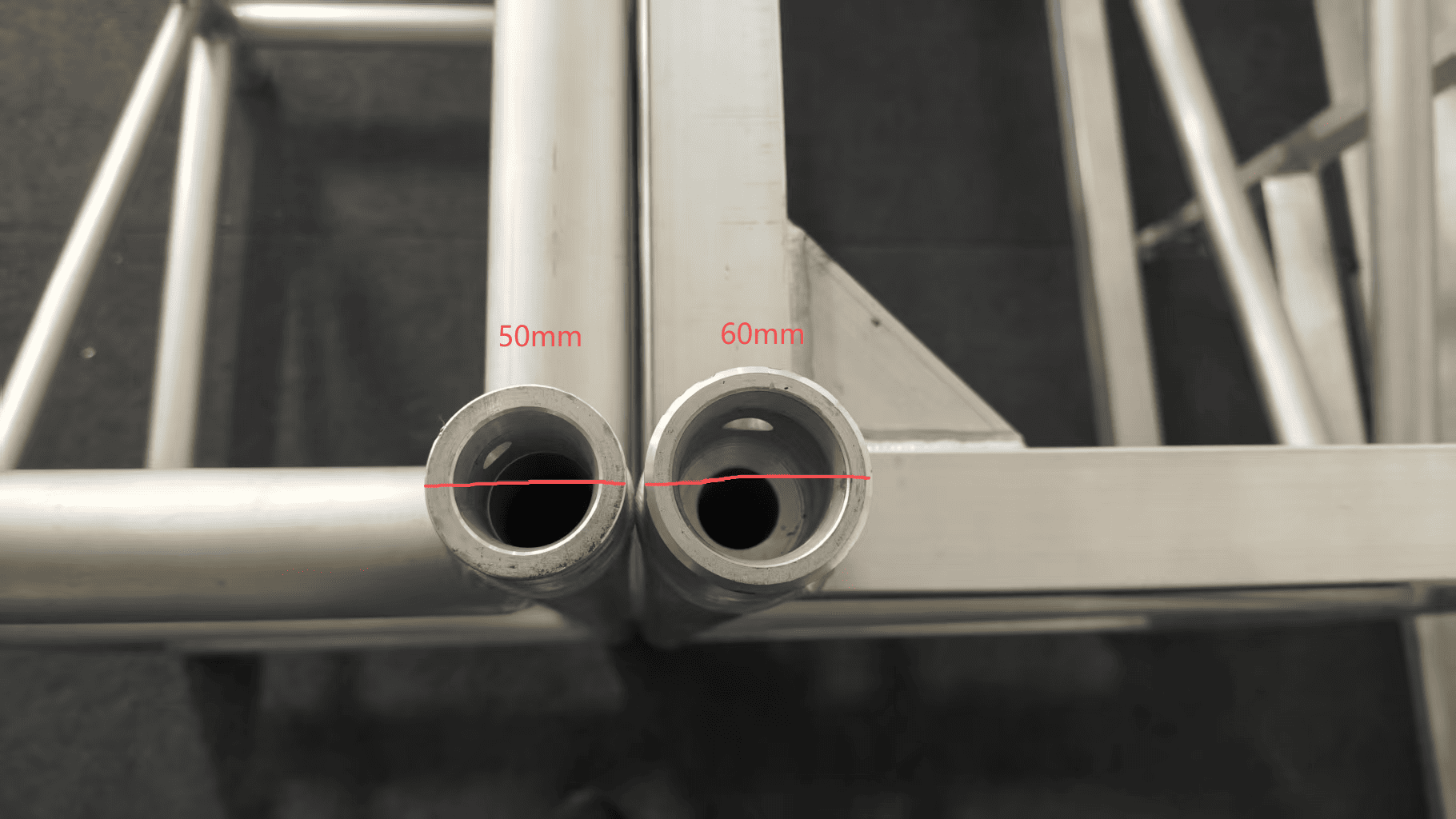
From my experience in after-sales support, this is the most frequent issue we encounter. A customer will call us, frustrated because the sleeve block they ordered doesn't connect to their truss, even though the dimensions match. The problem is almost always the connector system. Different manufacturers use different types of connections. The most common are spigoted or conical connectors, but they are not universal.3 For example, some systems use a 50mm main tube diameter, while others use a 60mm diameter4. The sleeve block must be designed for the specific spigot, conical coupler, and pin or clip system your truss uses. Ordering the wrong one means the pins won't align, the connection will be loose, or it won't connect at all. This isn't just an inconvenience; it's a huge safety hazard. A loose connection under load can lead to system failure.
Here is a simple table to show what I mean:
| Truss Series | Cross-Section | Correct Sleeve Block Connector | Incorrect (But May Seem to Fit) |
|---|---|---|---|
| Brand A | 290x290mm | Conical Coupler, 50mm Spigot | Bolted Plate Connection |
| Brand B | 12"x12" | Bolted Plate Connection | Conical Coupler, 50mm Spigot |
| Brand C | 400x400mm | Conical Coupler, 60mm Spigot | Conical Coupler, 50mm Spigot |
Always confirm the exact connection type before you buy.
Why is a Sleeve Block More Than Just a Cube of Aluminum?
It's easy to look at a sleeve block and see a solid chunk of metal. You assume it's strong. But unseen factors like material grade or weld quality could be weak points.
A sleeve block is a highly engineered component. Its design, material grade like 6061-T6 aluminum, and welding quality directly determine its ability to handle immense shear forces5. It's the single point transferring the entire grid load to the towers.

This component acts as the primary junction in your ground support system. It connects the horizontal truss grid, which carries the weight of lights, sound, and video screens, to the vertical towers that lift it. All the weight from the entire grid is funneled through these few sleeve blocks. They don't just hold static weight. During the lifting process, they are subjected to powerful shear forces. As the structure is raised, the forces try to tear the block apart. This is why its internal design and construction are so important. As a manufacturer, we don't just use any aluminum. We use high-grade 6061-T6 aluminum because of its excellent strength-to-weight ratio and corrosion resistance6. The "T6" temper means it has been treated to reach its maximum strength. Furthermore, the welding is a critical quality control point for us. Each weld must be perfect to distribute these forces evenly. A single bad weld can create a stress point that will fail under load.7 Think of it as the keystone in an arch; if it fails, the entire structure comes down.8
How Can I Ask for the Right Sleeve Block Like a Pro?
You're ready to order, but you're not sure how to describe what you need to a supplier. Vague requests lead to receiving the wrong parts and wasting valuable time and money.
To buy like a pro, shift your request from a simple dimension to a technical verification. Specify your truss model, the exact connector type and size, and always ask for the certified load rating for that specific block9.
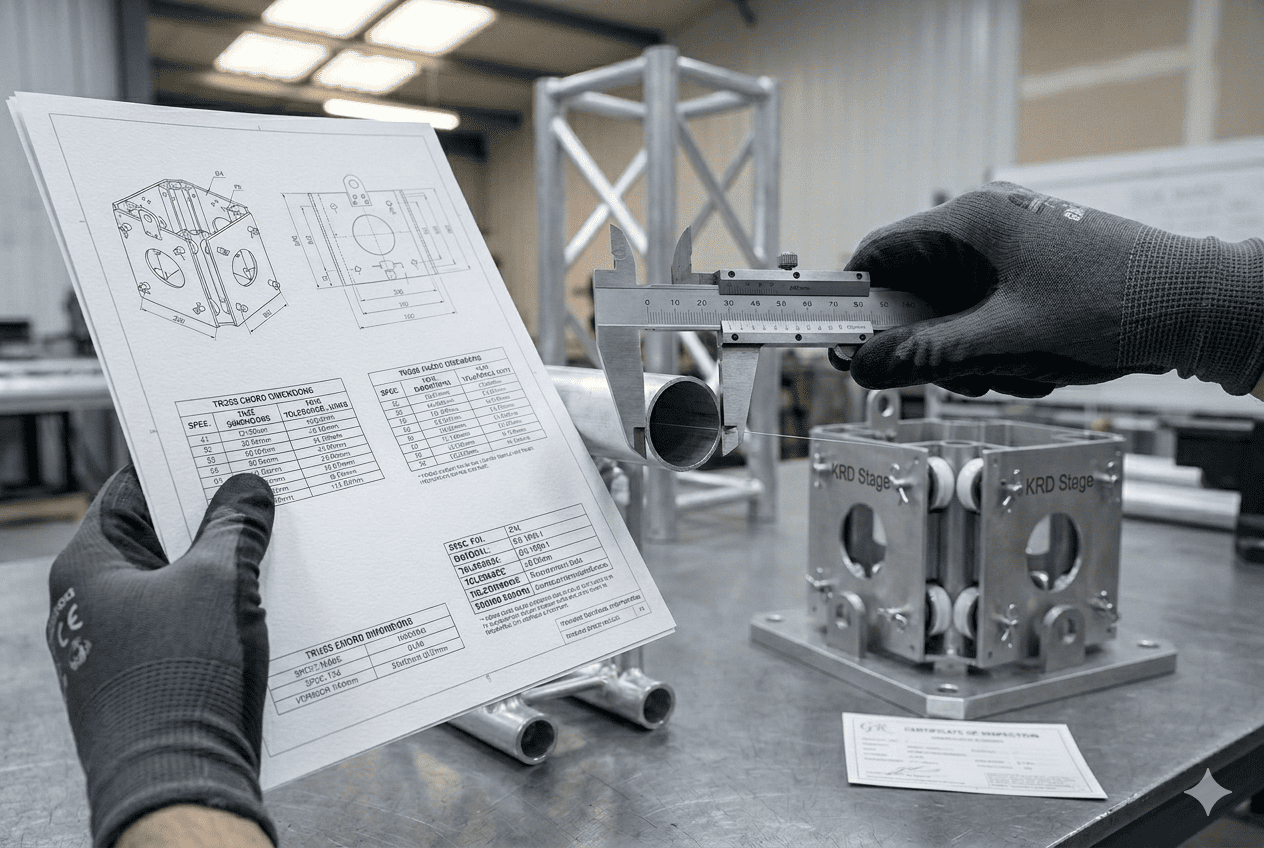
When I receive an inquiry from a potential customer, I can immediately tell their level of experience by the questions they ask. A professional buyer knows that details matter for safety and liability. Instead of just saying "I need a sleeve block for my 12-inch truss," they provide the information needed to get the right part the first time. This saves everyone time and prevents dangerous mistakes. When you contact a supplier, me or anyone else, you are starting a technical conversation. Providing clear specifications shows that you are a serious professional who prioritizes safety. It also helps us, the manufacturer, move faster. We don't have to spend days emailing back and forth to figure out your needs. We can immediately check our inventory or production schedule and give you an accurate quote and delivery time. This professional approach builds a better, more efficient relationship between buyer and supplier.
Here's a comparison of a vague request versus a professional one:
| Aspect | Vague (Amateur) Request | Specific (Professional) Request |
|---|---|---|
| Item | "I need a sleeve block." | "I need four sleeve blocks for my KRD-S29 290x290mm square truss system." |
| Compatibility | "It's for a 12-inch truss." | "They must be compatible with a 50mm spigot and conical coupler system." |
| Performance | "It needs to be strong." | "What is the certified load rating for this block in a 4-post configuration?" |
| Application | "I use it for concerts." | "The grid will have an 8m x 6m span and will support a 1000kg UDL10." |
When a customer sends me the "professional" request, I know they're a partner in safety.
Conclusion
The sleeve block is a critical safety component, not a commodity. Always verify connector compatibility, material quality, and load ratings to protect your investment and ensure your ground support system's integrity.
"Wood Truss Failures - Penn State College of Engineering", https://www.engr.psu.edu/ae/thesis/failures/MKP/failures/failures.wikispaces.com/Wood_Truss_Failures.html. Safety standards and alerts from industry bodies like ESTA (Entertainment Services and Technology Association) often highlight the risks of component incompatibility, which can compromise structural integrity and lead to system collapse. Evidence role: case_reference; source type: institution. Supports: The source should provide evidence, such as safety bulletins or incident analyses, demonstrating that using incorrect or incompatible components in a truss system can lead to structural failure.. Scope note: The source may discuss general component incompatibility rather than focusing exclusively on sleeve blocks, but the principle remains applicable. ↩
"[PDF] Synthetic Sling Failure - Evaluations and Recommendations - OSTI", https://www.osti.gov/bridge/servlets/purl/966779-KTqxAi/966779.pdf. Industry safety communications and training materials frequently warn that attempting to connect truss components with mismatched connector systems is a critical error that can lead to a loss of connection integrity and potential structural failure. Evidence role: expert_consensus; source type: institution. Supports: The source should confirm that mismatched connectors are a recognized and significant safety hazard in the event rigging industry.. Scope note: While sources may confirm the danger, quantifying it as 'common' may be difficult without specific statistical data, which is often not publicly available. ↩
"Truss - Wikipedia", https://en.wikipedia.org/wiki/Truss. A survey of major truss manufacturers' specifications confirms that while spigoted and conical couplers are prevalent, their dimensions, tolerances, and fastening methods are proprietary, making them non-interchangeable between different systems. Evidence role: general_support; source type: other. Supports: The source should describe the different types of truss connection systems used in the industry, noting the prevalence of conical/spigot systems and the lack of universal interchangeability between brands.. ↩
"24" Wide Aluminum Truss Specifications - Exhibit And Display Truss", https://exhibitanddisplaytruss.com/aluminum-truss/24-wide-profile-aluminum-truss/24-wide-aluminum-truss-specifications/. A review of product catalogs from various leading truss manufacturers confirms the use of multiple, incompatible main tube chord diameters, with 2 inches (50.8mm) being a common standard, but other sizes like 60mm also being used for heavy-duty applications, necessitating different sleeve blocks. Evidence role: general_support; source type: other. Supports: The source should show that different major truss manufacturers produce systems with varying main tube diameters, such as 50mm and 60mm.. ↩
"Shear force - Wikipedia", https://en.wikipedia.org/wiki/Shear_force. Engineering mechanics principles define shear force as a force acting parallel to a surface or plane. In a ground support system, the sleeve block experiences significant shear stress as the entire weight of the horizontal grid attempts to slice the block away from its connection to the vertical tower. Evidence role: definition; source type: education. Supports: The source should define shear force and explain how it acts on a sleeve block within a ground support system as the vertical tower lifts the horizontal grid.. ↩
"Aluminum 6061-T6 (UNS AA96061) | NIST", https://www.nist.gov/mml/acmd/aluminum-6061-t6-uns-aa96061. Material science databases and engineering handbooks document that 6061-T6 aluminum alloy offers a high tensile strength (typically around 310 MPa) combined with a low density and good resistance to atmospheric corrosion, making it a suitable material for high-load, lightweight structural applications. Evidence role: statistic; source type: research. Supports: The source should provide technical data on the mechanical properties of 6061-T6 aluminum, including its tensile strength, density, and corrosion characteristics.. ↩
"Fatigue of welded joints - Wikipedia", https://en.wikipedia.org/wiki/Fatigue_of_welded_joints. Research in materials science and structural engineering demonstrates that weld discontinuities act as stress concentrators, which can lower the fatigue life of a component and serve as initiation sites for cracks, potentially leading to catastrophic failure well below the theoretical load capacity of the base material. Evidence role: mechanism; source type: paper. Supports: The source should explain how welding defects like porosity, lack of fusion, or cracks create stress risers that can initiate fractures and lead to structural failure.. ↩
"Single point of failure - Wikipedia", https://en.wikipedia.org/wiki/Single_point_of_failure. In systems engineering, a single point of failure (SPOF) is a part of a system that, if it fails, will stop the entire system from working. The sleeve block in a ground support system can be considered a SPOF, as its failure would disconnect the grid from the tower, leading to a collapse. Evidence role: mechanism; source type: education. Supports: The source should define a 'single point of failure' (SPOF) and explain its significance in system safety and design.. Scope note: The source will provide a general definition of SPOF; its application to a sleeve block is an interpretation of that principle. ↩
"1926.251 - Rigging equipment for material handling. - OSHA", http://www.osha.gov/laws-regs/regulations/standardnumber/1926/1926.251. Industry standards, such as ANSI/ESTA E1.21, specify requirements for the design, manufacture, and use of truss systems, including the mandate that components be marked with or have documented certified load ratings that users must adhere to for safe operation. Evidence role: general_support; source type: government. Supports: The source should be an official standard that requires manufacturers to provide, and users to consult, certified load ratings for rigging components.. ↩
"Uniformly Distributed Load [All YOU Need To Know] - Structural Basics", https://www.structuralbasics.com/uniformly-distributed-load/. In structural engineering, a Uniformly Distributed Load (UDL) is a force that is applied evenly over a length or area of a structure, such as the total weight of lighting fixtures spread across a truss span. It is expressed in units of force per unit length (e.g., kg/m or lbs/ft). Evidence role: definition; source type: encyclopedia. Supports: The source should define 'Uniformly Distributed Load' (UDL) and distinguish it from other types of loads, like point loads.. ↩